
LUGANO CITY
Role-Based Performance Evaluation System
Translating a multi-phase HR evaluation process into a structured, role-aware desktop platform.
Designed within a public administration environment, the system required structured governance, transparent decision flows and clearly defined multi-role process control.
This project focused on transforming complex evaluation logic into a coherent, interaction-driven system supporting employees, managers and HR simultaneously.
Project Scope
Designing the interaction architecture for a multi-role evaluation process including:
• Phase-based workflows
• Weighted objective scoring (100% constraint logic)
• Role-based views (Employee / Manager / HR)
• Status tracking and validation states
• High-fidelity interactive desktop prototyping for stakeholder alignment
Role: UX/UI Designer – End-to-End Responsibility
Scope: Process Architecture · Interaction Design · High-Fidelity Prototyping (Figma)
Project Context
Desktop-First Enterprise UX Environment
• HR-driven internal system
• Multi-role approval logic
• High data density and governance constraints
• Process transparency requirements
Product Challenges
Multi-phase evaluation process with fixed timelines
Role-based responsibilities (Employee, Manager, HR)
Weighted objective logic (100% constraint rule)
High data density in desktop environment
Need for transparency and process clarity
HR override and validation states
Project Objectives
Translate complex HR business logic into a structured interaction system
Reduce cognitive load in multi-step evaluation workflows
Enable clear role separation while maintaining system coherence
Provide real-time validation feedback (scoring & percentage logic)
Create a high-fidelity interactive prototype for stakeholder alignment
Interaction Architecture
Before designing individual screens, the evaluation process was translated into a structured interaction architecture defining phases, role transitions and validation logic.
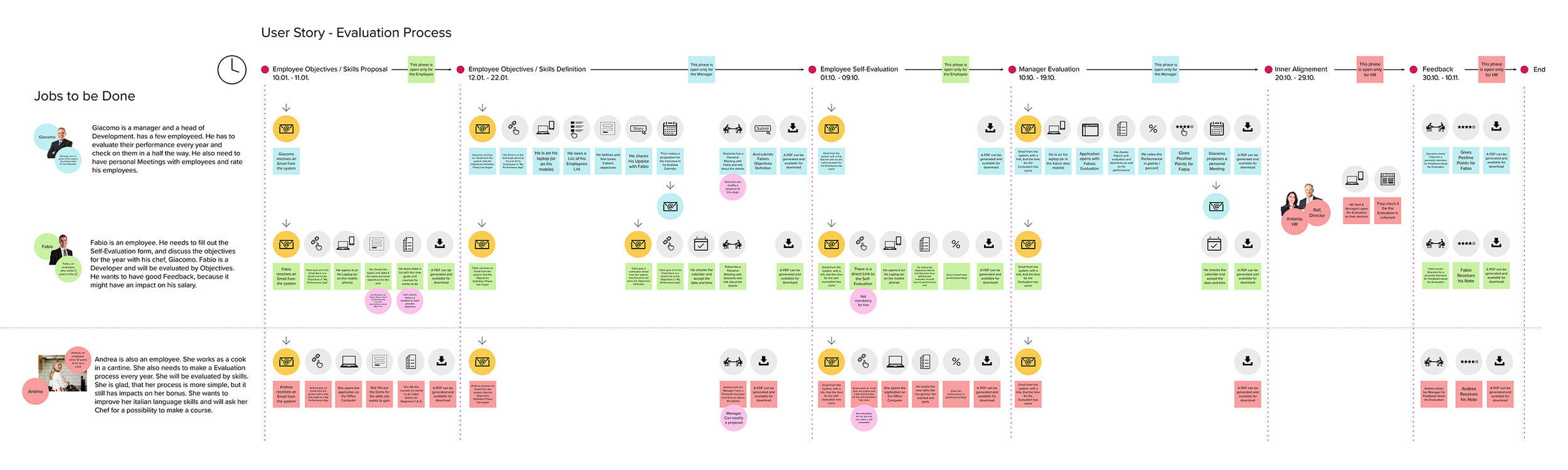
Early Process Exploration
To structure the multi-phase evaluation logic, early interaction flows were mapped through low-fidelity paper prototypes before translating them into digital wireframes and interactive desktop prototypes.

High-Fidelity Prototype
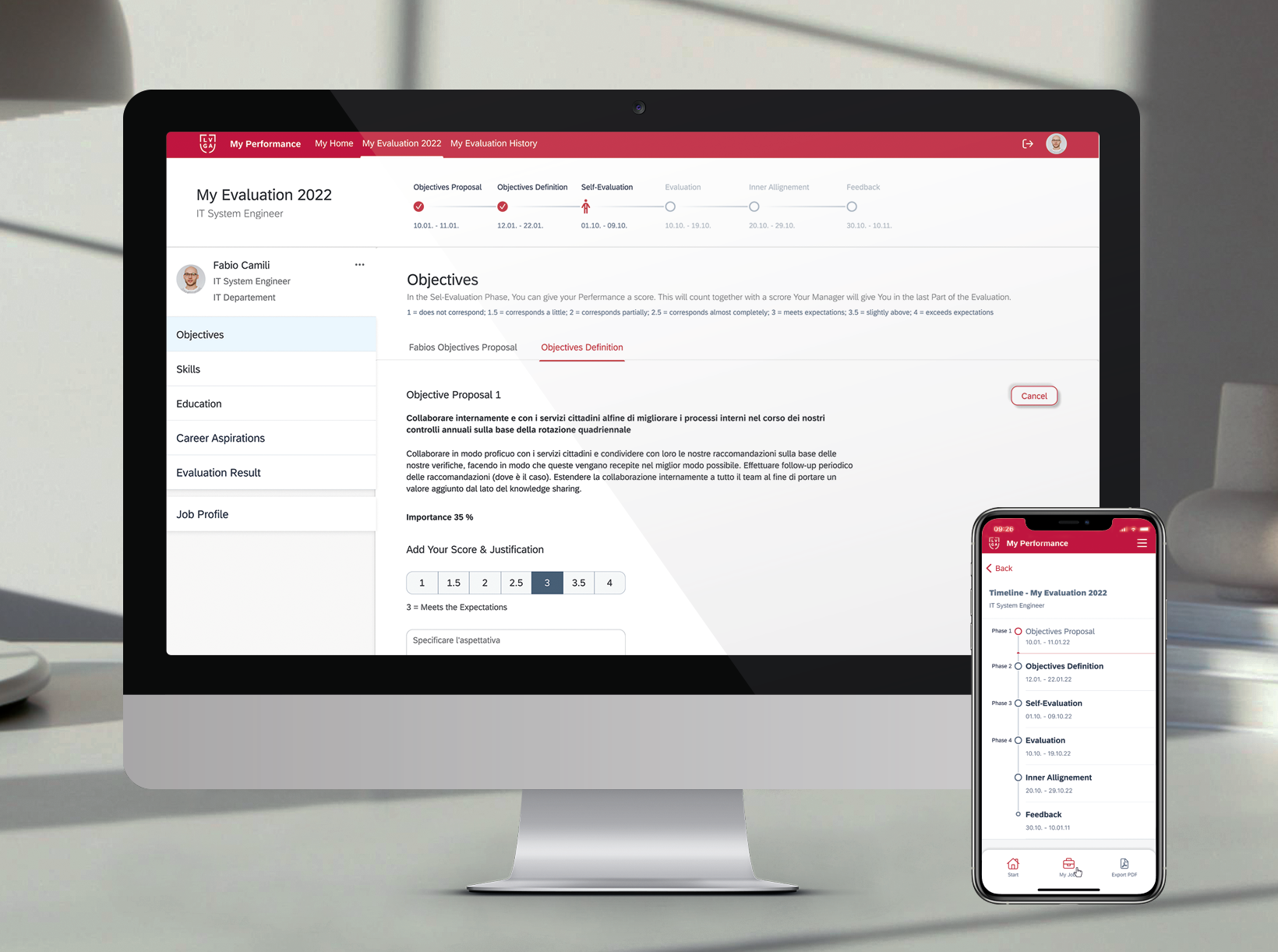
Phase-Based System Architecture. The evaluation process was structured into four core system phases, each governed by role-based permissions, timeline constraints and validation logic. A fully interactive, end-to-end prototype was developed to simulate the complete evaluation lifecycle across roles and system states. The screens shown below represent selected excerpts from a significantly larger clickable evaluation environment.
Phase 1 — Objectives Proposal (Employee)
Employees initiate the evaluation cycle by defining objectives within a fixed percentage allocation model (capped at 100%), subject to deadline control.
Phase 2 — Objectives Definition (Manager)
Managers refine and validate objectives, ensuring alignment with governance constraints while maintaining traceable version states.
Phase 3 — Self-Evaluation (Employee)
The self-evaluation phase integrates weighted scoring with qualitative justification, feeding into the overall evaluation calculation.
Phase 4 — Manager Evaluation & Validation
The final evaluation phase enables structured review, score validation and HR override control within a role-based desktop environment.
Mobile Version
Mobile views were intentionally simplified to support status awareness and essential interactions, while complex validation and high-density data workflows remained desktop-focused.
Conclusion & Key Takeaways
One of the key learnings was the value of investing heavily in user flow architecture at the beginning.
Re-aligning the team around a shared process model reduced ambiguity and enabled a coherent, role-driven system design.
Mobile support was provided for visibility and essential actions, but the complexity of the evaluation logic required a structured desktop environment.
This project strengthened my approach to enterprise UX: structure first, interaction second, interface last.
This project reinforced my belief that clarity in process architecture is the foundation of any successful enterprise system.