
LAAX — Location-Aware Pay-as-you-go Experience
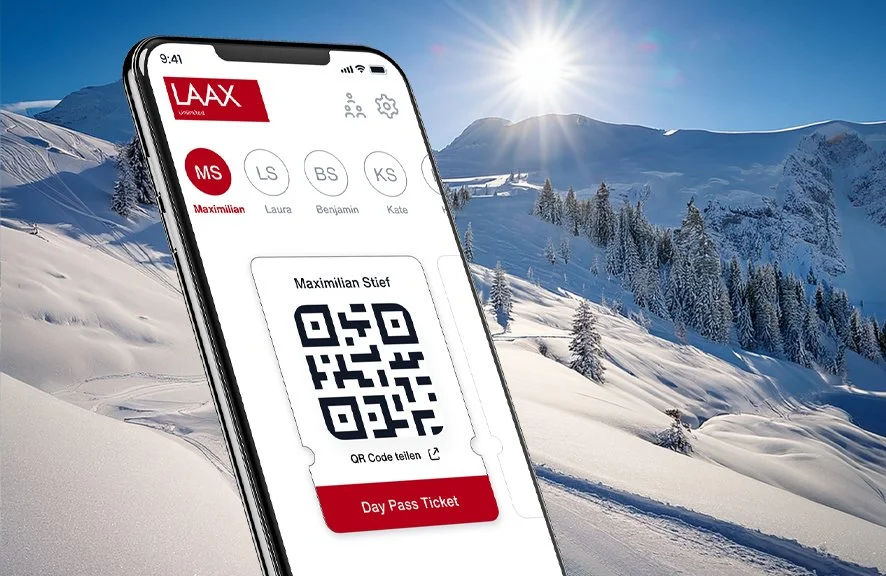
Transforming an overwhelming ski ticket system into an intuitive, pay-as-you-go mobile experience tailored to users in real time.
LAAX operates a highly complex ticket ecosystem across multiple zones and seasonal offerings.
This project rethinks the booking logic through a context-aware mobile approach — simplifying booking, navigation, and pricing while reducing cognitive load and preserving flexibility.
Project Scope
Reframing the booking experience for a digitally native, experience-oriented audience through a mobile-first approach.
Role: UX/UI Designer
Scope: Concept · User Flows · Low- to High-Fidelity Prototyping (Paper, Balsamiq, Figma)
Project Context
LAAX operates a multilingual, multi-product ticketing ecosystem with high complexity due to seasonal offers, zone pricing, and optional services - creating cognitive overload during booking.
Problem
The existing LAAX booking system had evolved into a highly fragmented ticket ecosystem with hundreds of zones, options and combinations.
Users struggled to:
understand what was included
compare pricing transparently
avoid double-booking
confidently choose the right option
This complexity increased cognitive load and risked drop-offs during the booking process. The challenge was not adding more features — but reducing complexity while preserving flexibility.
Solution
A Smart, Location-Aware App - To address this complexity, I designed a smart, location-aware mobile experience that guides users through booking and navigation in real time.
Key design principles:
• Progressive disclosure
• Context-driven filtering
• Transparent pricing logic
• Mobile-first clarity
The app automatically detects the user's location on the slopes using sensors and GPS. It recommends relevant routes and tickets based on live data
Transparent pricing structure - clear overview of what is included, preventing overpayment and double-booking. Users can see including for companions (family or friends), what they’ve already booked, and what they still need – reducing confusion and ensuring peace of mind
The entire booking and activity planning process is more intuitive, faster, and mobile-first
The result is a more intuitive, faster and confidence-driven booking experience.
Market & Pattern Analysis
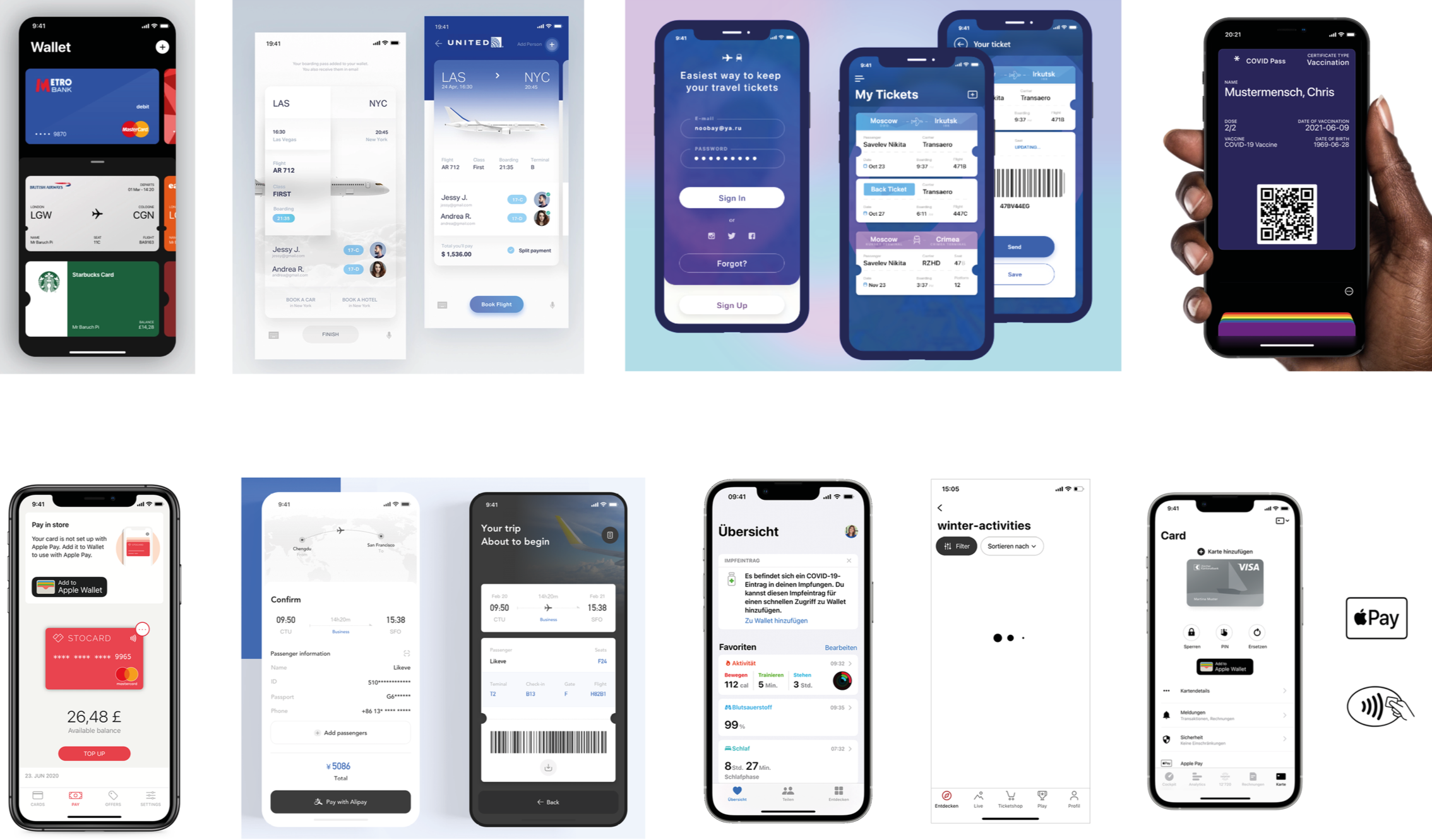
To understand how complex booking systems are structured, I reviewed existing ski resort apps and digital ticket platforms.
The analysis focused on:
• Navigation structure
• Pricing transparency
• Step logic in booking flows
• Context-aware features
Key observations:
Most systems rely on static ticket grids, forcing users to manually compare options.
• Most platforms overload users with ticket combinations upfront
• Pricing breakdowns are often hidden or unclear
• Few systems adapt dynamically to user context
This informed the decision to design a progressive, context-driven booking model.
Interaction Model
The core idea was to shift from a static ticket overview to a dynamic, location-aware logic that adapts available options in real time.
This reduces the need for users to manually compare dozens of combinations.

Key Design Decisions
• Why location-aware instead of static filters
• Why step-by-step instead of overview grid
• Why pricing transparency first
From Concept to Prototype
Competitive Analysis (Benchmark Review, Best Practice Exploration, Pattern Analysis)
Paper sketches
Lo-Fi Balsamiq wireframes
High-fidelity interaction prototype in Figma
Lo-Fi Wireframes
The ticket overview was redesigned into a step-by-step decision flow.
Pricing clarity was prioritized through simplified breakdown views.
High-Fi Prototype
Concept Outcome
The proposed interaction model reduces the need for users to manually compare complex ticket combinations.
By introducing contextual logic and progressive decision-making, the booking experience shifts from static selection grids to guided, confidence-driven choices.
The prototype demonstrates how cognitive load can be reduced without limiting flexibility.
Outcome Highlights
• Reduced manual ticket comparison
• Introduced progressive booking logic
• Improved pricing clarity perception